
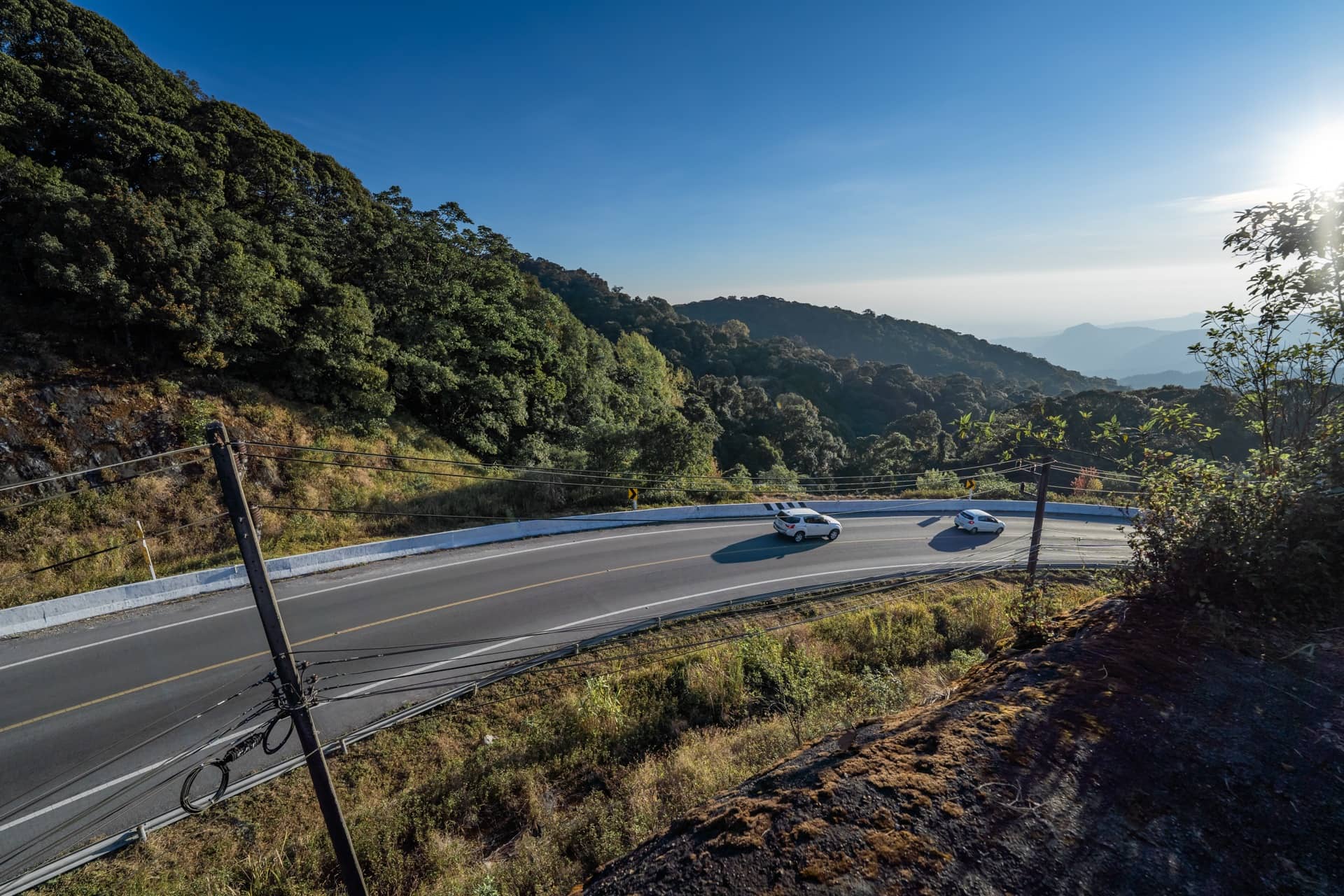
Most car-buying advice you'll find for Panama is really advice for Panama City. Chiriquí is a different market: fewer dealers, a smaller pool of mechanics who know unusual brands, and terrain that ranges from flat David streets to steep, sometimes unpaved roads above Volcán and Cerro Punta. The right car for someone settling in David is not automatically the right car for someone settling in the highlands, and the right car for either isn't necessarily the one that would make sense back home.
This isn't a top-5 list. The value here is in the reasoning, so you can apply it to whatever specific car you're actually looking at, not just the ones we happen to mention.
Why parts availability outranks badge prestige here
In most of North America, buying a less common brand mostly costs you a slightly longer wait at the dealership. In Chiriquí, it can mean a genuinely different ownership experience: parts shipped from Panama City or from the US, and a smaller pool of mechanics who've actually worked on that specific system before.
Toyota's dominance on Panama's roads isn't really about brand loyalty. It's infrastructure. Toyota parts are widely available and reasonably priced, and close to every mechanic in the country has worked on a Toyota engine before, a level of familiarity that doesn't exist to the same degree for less common brands. Hyundai and Kia follow behind Toyota in overall presence, and both have an actual dealer footprint in David: Petroautos has represented Hyundai in Chiriquí and Bocas del Toro since 1988, and Kia lists a Chiriquí location among its national dealer network. Toyota's own presence in David runs through Toyota Ricardo Pérez, the brand's exclusive national distributor.
That matters more than it sounds like it should. A car that's slightly less desirable on paper but has a mechanic five minutes away who's rebuilt its transmission a dozen times is, in practical terms, a better car to own here than one that's objectively nicer but sends you searching for a specialist every time something needs attention.
Reliability and price track together at the top of the market. Toyota is the most reliable brand on Panama's roads, and it costs accordingly, you pay for that reputation. Honda runs a close second, backed by Bahía Motors as the official distributor, and Hyundai holds up well too, with its own dealer network in David. Geely, the fastest-growing Chinese automaker here, has earned a real reputation for build quality: it's the parent company behind Volvo, Polestar, and Lotus, and it shares manufacturing and quality-control standards with Volvo across its lineup. That parentage shows in the cars.
Chinese brands, Changan, Geely, JMC among them, have grown quickly and now make up roughly a fifth of Panama's new vehicle market, and the infrastructure has caught up with them. Parts and mechanic support for these brands is on par with established Japanese and Korean brands here, in some cases better, and several Chinese automakers back that up with free maintenance for the first few years of ownership. Almost every major brand, Chinese ones included, has a dealer presence in David, so parts and service aren't the gap they might be elsewhere.
If you're set on a brand that doesn't have any dealer presence in Panama at all, that's still a real decision you can make with your eyes open. Parts sourced from outside the country take longer and cost more than for a brand with local dealer support, and that gap doesn't close no matter how good the car is on paper.
A second opinion costs nothing to ask for
This kind of local, brand-by-brand judgment call is a lot of what we bring to a search. If you want a second opinion before you commit to a make or model, message us.
Message Us on WhatsAppHow much clearance do you actually need?
This is where assumption tends to run ahead of reality. New arrivals planning to live above David, in Volcán, Cerro Punta, or Boquete, often assume they need a serious 4WD SUV just to get around, and that's only half true.
The main roads running through Volcán and Cerro Punta town centers are paved and in reasonable condition. For ordinary driving, into town, to the market, between the main settled areas, a standard vehicle is genuinely sufficient. Where clearance and 4WD start to matter is once you're off those main paved roads: unpaved agricultural-zone roads, some outlying residential streets, and anywhere that gets rough during rainy season, roughly May through November, when unpaved sections deteriorate.
So the honest version of the question isn't "do I need 4WD to live in the highlands." It's "will I be driving on unpaved roads regularly, or living somewhere off the main paved route." If the answer is yes, clearance and 4WD stop being a nice-to-have and start being a real factor in how often you get stuck or how much wear your car takes. If you're settling right in a highland town center on the paved main road, you may be paying for capability you won't use most days.
The Suzuki Jimny is a standout for exactly this kind of terrain: small, genuinely capable off the paved main roads, and priced well below a Toyota with comparable clearance. Suzuki plays a similar role to Toyota here, Japanese-built and dependable, just at a lower price point. What you give up is the tech and modern features a newer Toyota or Hyundai would have, not the mechanical quality. For anyone actually living off the paved route above Volcán or Cerro Punta, it's one of the more sensible choices in this market, not just a cheap one.
Diesel versus gasoline: check the math before you assume it
If you're coming from the US or Canada, you likely have a reflexive sense that diesel means better fuel economy and lower running costs. Before you carry that assumption into a Panama purchase, look at current pump prices, because the picture here can be different, and it changes.
As of late July 2026, diesel in Panama was priced at roughly B/.1.271 per liter, gasoline at B/.1.257 for 95-octane and B/.1.181 for 91-octane. In other words, diesel was the most expensive fuel at the pump, not the cheapest, following one of the larger fuel price increases of the year. That's a real reversal of the assumption most North American buyers walk in with, and it's exactly the kind of number that goes stale fast, so check current prices before you run your own math rather than trusting the figures here months later.
In Panama's used market, diesel shows up mainly in pickups and larger SUVs, the Nissan Frontier, Ford Ranger, Isuzu D-Max, and diesel variants of the Toyota Prado or Land Cruiser, rather than in compact or mid-size passenger vehicles, where gasoline is standard. If you're cross-shopping a diesel pickup against a gas SUV for genuinely similar use, the fuel cost side of that comparison may not favor diesel the way it would at home right now.
What changes if you're planning to resell in a few years
Chiriquí is a small, regional market, and that changes how you should think about resale compared to buying in a larger market where almost anything eventually finds a buyer. Here, what a car is worth on paper matters less than what buyers in this specific market actually want when you're ready to sell.
That circles back to the same two factors already covered: parts availability and mechanic familiarity make a car easier to sell here, not just easier to own, because the next buyer is thinking about the same support network you were. And a vehicle well suited to the roads people are actually driving, whether that's flat David streets or the terrain above Volcán, tends to hold interest better than one that was a great fit for a different kind of driving. If you're weighing what you'll actually get for a car down the road, it's worth knowing what does and doesn't inflate a used car's price here in the first place, since that same market pressure runs both directions.
Toyota holds resale value better than anything else in this market, full stop. Hyundai and Kia sit in the middle: they hold up reasonably well but don't command Toyota money. Chinese brands are the weak point for resale specifically. Even the ones that are perfectly good cars to own don't command strong resale prices here yet, the local market simply doesn't pay up for them the way it does for Toyota. If resale value matters to your decision, weight that in even when the Chinese-brand car itself is solid.
The honest version of "it depends"
None of this points to one right answer, because the right answer depends on where in Chiriquí you're settling, how you'll actually use the car, and how long you plan to keep it. A flat, in-town commute in David and a daily drive on unpaved roads above Cerro Punta are different problems with different right answers, even though both are technically "buying a car in Chiriquí."
What we'd push back on is choosing a car the way you might have chosen one at home: on badge, on spec sheet, on what a review site says is the best in its class nationally. Here, the questions that actually matter are narrower and more local: who fixes this if it breaks, what does it cost to keep running, and does it actually suit the roads you'll be on.
If you're trying to work out what actually fits your specific situation, that's a better conversation to have before you start shopping than after you've fallen for a listing. Tell us where you're settling and how you'll be using the car, and we'll talk through what makes sense.
Not sure what fits your situation?
Message us and we'll talk it through before you start shopping.
Message Us on WhatsApp